Blown-In Insulation in Show Low & the White Mountains, AZ
Loose-fill cellulose or fiberglass that fills attics and existing walls evenly and fast — the most efficient way to hit Zone 5B's R-49 target without opening up walls.
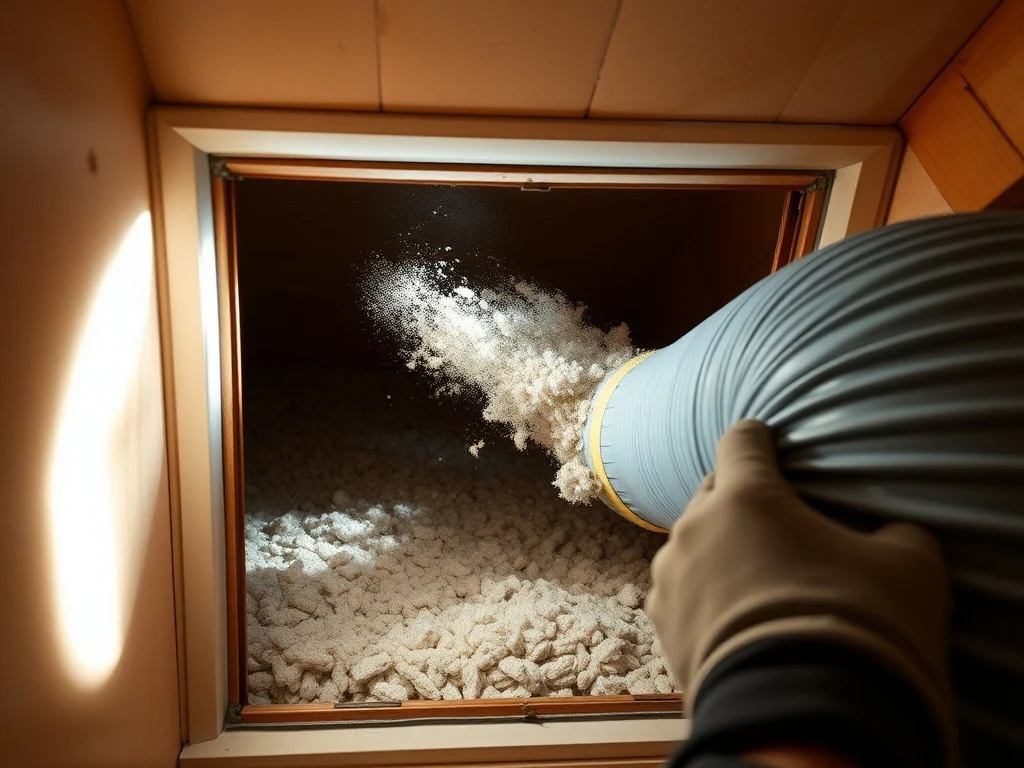
Blown-in insulation is one of the fastest, most cost-effective ways to raise a White Mountains home's efficiency. Loose-fill cellulose or fiberglass is blown through a hose to fill attics and enclosed wall cavities, flowing around wires, pipes, and framing to create an even, gap-free blanket. For attics especially — where most of a Show Low home's heat escapes — blown-in is the go-to solution to reach the R-49 target this climate demands.
Because it's installed as a loose fill, blown-in reaches into corners and irregular framing that rigid batts can't, which matters in the mixed-vintage housing stock around Show Low, Pinetop-Lakeside, and Taylor — additions built decades apart, settled attics, and sloped cabin ceilings that make a clean batt install nearly impossible. It's an ideal upgrade for existing homes where opening up walls isn't practical, and a fast way to retrofit an older manufactured or site-built home before winter.
Why homeowners choose it
- Even, gap-free coverage that flows around wiring and obstructions
- Fast installation with minimal disruption to the household
- Excellent for topping up under-insulated attics common in older White Mountains homes
- Cellulose option is made largely from recycled content
- Strong value per R-value gained compared to spray foam
- Can be dense-packed into existing walls without a full remodel
Cellulose vs. fiberglass loose-fill
Both cellulose and loose-fill fiberglass perform well; the right choice depends on the space and your priorities. Cellulose is made largely from recycled paper, is treated for fire resistance, packs densely, and is excellent at slowing air movement — a real advantage against the wind that comes across open pine-country terrain around Show Low and Snowflake. Loose-fill fiberglass is lightweight, resists moisture, and settles less over time. For deep attic blankets we often recommend cellulose for its density and air-slowing qualities; for certain applications fiberglass is the better fit.
We'll walk through the trade-offs and recommend the material that gives your specific home the best performance for the money.
How blown-in insulation works, start to finish
Free assessment
We inspect your home, measure existing R-value, and confirm what current Efficiency Arizona HEAR or UniSource funding applies.
Custom plan & itemized quote
A clear, honest scope — the right material in each area, built to Zone 5B's R-49 attic / R-20 wall targets.
Clean, professional install
Our crews prep, air seal, and install to your target R-value, on schedule and with the site protected.
Documentation & rebate help
We verify the finished work, document before-and-after depth, and help file current rebate paperwork.

Show Low's ~19 inches of average annual snowfall makes attic performance a year-round concern, not just a comfort issue — a properly blown-in, air-sealed attic keeps the roof deck cold and even, which is a core part of preventing ice dams alongside the ventilation work we do on every job.
Hitting Show Low's Zone 5B attic target
Show Low sits in IECC Climate Zone 5B at roughly 6,400 feet, where recommended attic insulation runs around R-49. Many older homes around Show Low, Pinetop-Lakeside, and the surrounding White Mountains were built to far lower standards decades ago, and even newer homes settle over time and leave money on the table every heating season. Blowing in additional loose-fill to bring your attic up to a modern R-value is consistently one of the highest-return improvements available, often paying for itself through lower bills within a few years.
We measure your existing depth, calculate what's needed to reach your target R-value, and install to an even, verified depth with a ruler marker left in place so the result is documented — useful both for your own records and for Efficiency Arizona HEAR rebate paperwork.
Prep and air sealing come first
Blown-in insulation performs best over a properly prepared attic. Before we add insulation, we look for and seal the air leaks — around can lights, top plates, plumbing and wiring penetrations, and the attic hatch — because insulation slows heat but doesn't stop air movement. Skipping this step leaves the biggest efficiency gains on the table. We treat air sealing and blown-in insulation as a package so your new R-value actually delivers its full value, whether that's a Show Low subdivision attic or an older Taylor farmhouse.
What a blown-in installation day looks like
Most blown-in attic projects are a single-day job. Our crew sets up the blower machine outside — typically staged in the driveway with the hose run up to the attic access — protects the work path through your home, and completes the air-sealing pass first. Once the leaks are closed, we feed loose-fill material through the hose and distribute it evenly across the attic floor, checking depth against our target as we go rather than eyeballing it. We finish by leaving ruler markers at several points so the depth is easy to verify at a glance, either by you or by a rebate program's inspector.
Disruption to the household is minimal. The blower and hose work is loud but contained to the attic and driveway, and most homeowners don't need to leave the house during the process. We clean up the staging area and walk you through the finished attic before we leave.
Ideal for
- Attics that are under-insulated or below the R-49 target
- Existing walls that need insulation without demolition
- Older Show Low, Pinetop-Lakeside, and Taylor homes with settled insulation
- Homeowners wanting a high-ROI efficiency upgrade before winter
- Sloped cabin ceilings and irregular attic geometry common in second-home construction
What affects the cost
Blown-In Insulation questions, answered
Show Low sits in Zone 5B, where recommended attic insulation is typically around R-49. Many existing homes fall well short of that. We measure your current depth and top up to your target R-value, which for most under-insulated attics delivers a fast payback through lower heating bills.
Both work well; it depends on the attic and your goals. Blown-in loose-fill is a fast, cost-effective way to reach a high R-value across a standard attic floor. Spray foam is the choice when you want to insulate at the roofline, seal a vaulted ceiling, or create a conditioned attic. We often pair air sealing with blown-in for the best value, and recommend foam where its air seal is worth the premium.
Usually yes. If your existing insulation is dry and in good condition, we can often add loose-fill on top to boost your R-value. If the old insulation is wet, rodent-contaminated, or damaged — common in rural attics near open land around Show Low and Taylor — we'll remove it first. An inspection tells us which path is right.
Some settling is normal, and we account for it by installing to the correct initial depth so your attic still meets its target R-value after settling. Cellulose settles more than fiberglass but packs densely; we install to documented depths so your rated performance holds up through White Mountains winters.
Related services
Ready for a free blown-in insulation estimate?
Tell us about your home and we'll put together a clear, no-pressure quote — plus tell you what current Arizona rebate funding you may qualify for.